Avoid Holiday Scams

Unusually low prices are a sign of a scam. Don’t click on ads that advertise a product at a very low price when you know it’s usually a very expensive item. Clicking the link in the ad could take you to a scammy site that takes your money and sends you something that looks totally different from what was advertised…or send you nothing at all.
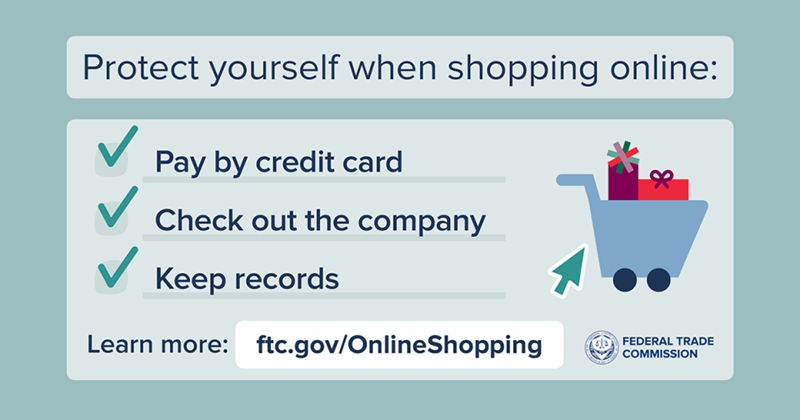
To protect yourself while shopping online:
- Do some research. Especially before you buy from an unfamiliar seller, search online for the name of the seller plus words like “review,” “complaint,” or “scam.” See what others say about their experience with the seller.
- Check the terms of the sale. Look at the price, other charges, their refund policy, who pays for return shipping, and if there’s a restocking fee.
- Pay by credit card, whenever possible. Credit cards offer more protections, and give you the option to dispute charges if what you get isn’t what you ordered, or you get nothing at all.
- Never buy from online sellers who demand you pay with gift cards, wire transfers, payment apps, or cryptocurrency. Only scammers tell you to pay that way.
Did you have a problem while shopping online? First, contact the seller and try to work it out. If that doesn't work, contact the company you used to make the payment to dispute the charges. If they can’t help, tell the FTC at ReportFraud.ftc.gov.
Article by Gema de las Heras, Consumer Education Specialist, FTC
Back to blogs